
E-Commerce: 2024 Valuation Multiples

E-commerce has become an integral part of global retail, reshaping how businesses and consumers interact. With its roots in the 1990s, e-commerce has rapidly grown into a multi-trillion-dollar industry, driven by advancements in technology, the proliferation of the internet, and the rise of digital payments.
From major marketplaces like Amazon and Alibaba to niche platforms catering to specific demographics and sectors, e-commerce has revolutionised the retail experience by making it more accessible, convenient, and efficient for both buyers and sellers.
In recent years, the sector has undergone significant transformations, particularly in response to the COVID-19 pandemic. The crisis accelerated the shift toward online shopping as consumers were forced to adapt to a digital-first world. During this period, e-commerce experienced unprecedented growth, with companies scrambling to meet the surging demand for online services.
This growth, however, also came with challenges. Many businesses had to quickly scale their operations, invest in digital infrastructure, and meet the logistical demands of a booming online marketplace. As the sector matures, companies are focusing on more than just growth, prioritising sustainability, profitability, and long-term customer engagement.
Today, e-commerce is more than just a platform for transactions—it’s a complex ecosystem powered by data, AI, and sophisticated supply chains. The integration of technologies like Artificial Intelligence has opened new possibilities for improving customer experiences, automating processes, and enhancing personalisation.
As e-commerce continues to evolve, businesses that leverage these technologies effectively are well-positioned to capitalise on the next wave of innovation. However, the sector remains highly competitive, with both established giants and emerging startups vying for market share in an increasingly crowded space.
Hampleton Partners‘ latest Digital Commerce Report presents a comprehensive overview of the M&A landscape within the e-commerce sector.
After a marked slowdown in the second half of 2023, M&A activity has picked up slightly in 2024, as market conditions begin to stabilise. However, macroeconomic challenges, such as rising costs, inflation, and supply chain disruptions, continue to weigh on profitability. Buyers in the sector have increasingly shifted their focus from revenue growth to stable earnings, with EBITDA becoming the standard metric for assessing value.
A key driver of this resurgence in activity is the integration of AI technologies into e-commerce operations. From inventory management to customer engagement, companies are leveraging AI to streamline operations and enhance the user experience. Notably, Amazon’s suite of AI tools, including AI-generated product images and shopping assistants, is leading the way in transforming how companies engage with their customers. Additionally, smaller startups such as Kua.ai and Copy.ai are providing innovative tools for sellers to generate content optimized for platforms like Instagram and TikTok, further energizing the sector.
The report also highlights a shift in B2B commerce, which is adopting B2C marketing strategies, particularly the use of influencers. As the workforce becomes increasingly digital-native, these strategies are proving effective in engaging a new generation of decision-makers.
Despite these innovations, the sector faces challenges from economic instability and competitive pressures. Insolvencies and distressed sell-offs—like those of German retail giants Signa Sports and Weltbild—underscore the risks that remain in the market. Nevertheless, companies like Temu and Shein are thriving by leveraging social media and AI, proving that there are opportunities for growth even in a turbulent environment.
E-Commerce Tech Valuation Multiples
Hampleton Partners’ report focuses closely on valuation metrics, particularly revenue and EBITDA multiples. The data shows a clear decline in revenue multiples, which followed a downward trend after peaking at 2.7x at the end of 2022.
By the first half of 2024, median 30-month trailing revenue multiples were only 2.0x.
Source: Hampleton Partners
When it comes to EBITDA, which as we mentioned above is now broadly considered the main valuation KPI, the trend for median trailing 30-month multiples is more stable, although the data has seen some ups and downs, particularly during the pandemic. However, by H1 2024 the median EBITDA multiple for e-commerce companies was 10x.
These valuation metrics illustrate the ongoing shift in the e-commerce sector, as companies and investors alike focus on sustainable, long-term growth over the rapid, often unsustainable expansion seen in previous years, hence the increased focus on profitability metrics such as EBITDA. As the sector continues to mature, understanding these valuation dynamics will be crucial for both buyers and sellers navigating the M&A landscape.
The information available on this page is of a general nature and is not intended to provide specific advice to any individuals or entities. We work hard to ensure this information is accurate at the time of publishing, although there is no guarantee that such information is accurate at the time you read this. We recommend individuals and companies seek professional advice on their circumstances and matters.
-

Robotics & AI: 2026 Valuation Multiples
3 February 2026
Robotics & AI Companies started 2025 with a median EV/EBITDA multiple of 15.8x, dipping slightly in Q2 before rising to 16.8x in Q4 2025.
Report : Tech, Trends and Valuation
-
Lessons From The UK’s Top 50 Exits
12 November 2025
The most successful founders are those who build a company to be bought, not sold.
Report : Exit and Trends
-
SaaS Stumbles in 2025: End of an Era, or Just Growing Pains?
23 October 2025
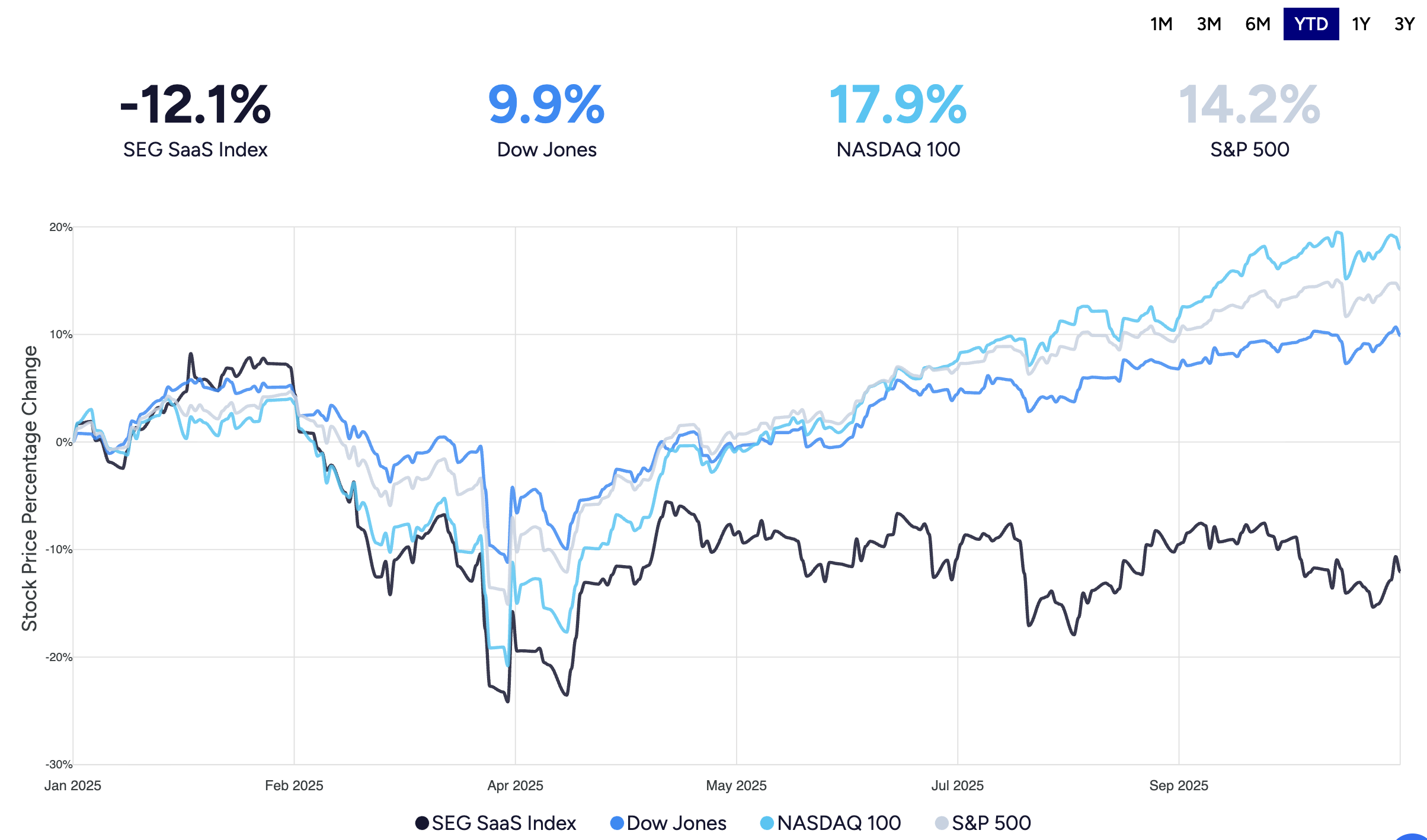
There is a widening gap between SaaS and the rest of the market starting in April 2025, and it’s just getting larger and larger.
Report : Tech and Valuation



Sign up for the Founder's Bulletin
Join our community of 4,000 + Founders, Entrepreneurs & Advisors. Refreshingly simple financial insights to help your business soar.
