
Entrepreneurship in the UK: The “Start, Scale, Stay” Plan Explained
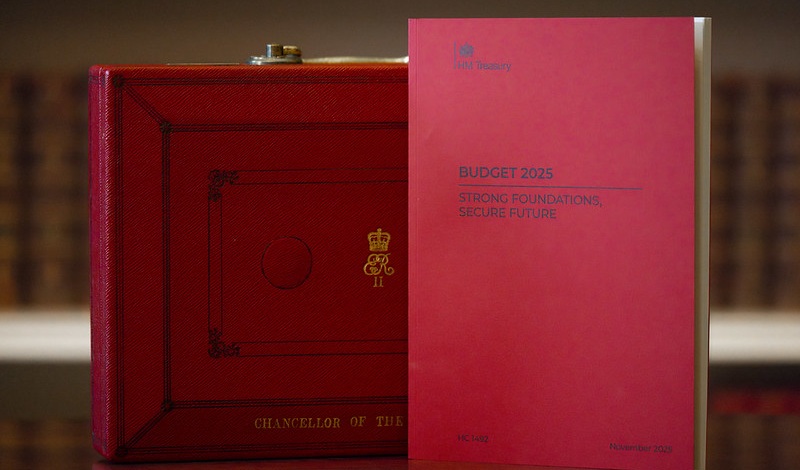
Although most of the conversation around last week’s Budget was around potential income tax increases, OBR projections and productivity, the Chancellor has released a new prospectus titled Entrepreneurship in the UK, signalling a desire to shift the narrative. According to Rachel Reeves, the government has become too focussed on “managing the downside” and must now pivot to “maximising the upside”.
The timing is critical. With the government in a tight financial (and political) spot, the strategy relies heavily on stimulating private growth rather than purely increasing government income.
The plan is built on a simple mantra: backing companies to start, scale, and stay in the UK.
Starting Up: Focusing the Firepower
The UK has long been viewed as an “incubator economy”—brilliant at research, but poor at commercialisation. To combat this, the government is confirming a record R&D budget rising to £22.6 billion by 2029-30. However, the strategy here is about direction, not just volume. A reset of UK Research and Innovation (UKRI) will see £7 billion specifically targeted at innovative companies to help bring breakthroughs to market.
There is also a concerted push to unlock the “Ivory Tower.” New funding includes £4 million annually for Enterprise Fellowships to help researchers spin out, and £25 million for entrepreneurship-focused doctoral training.
Scaling Up: Tax Reliefs and the Capital Gap
The most significant announcements for business owners concern the “scale-up” phase. The prospectus acknowledges that UK firms often sell out too early or move abroad for capital. To counter this, the government is significantly expanding key tax reliefs starting in April 2026.
The limits for the Enterprise Investment Scheme (EIS) and Venture Capital Trusts (VCT) are doubling. The annual company investment limit will rise to £10 million (£20 million for knowledge-intensive companies), while the lifetime limit hits £24 million.
| Metric | Current Limit | New Limit (April 2026) |
| Annual Investment Limit (Company) | £5 million (£10m for Knowledge Intensive) | £10 million (£20m for Knowledge Intensive) |
| Lifetime Investment Limit (Company) | £12 million (£20m for Knowledge Intensive) | £24 million (£40m for Knowledge Intensive) |
| Gross Assets Test (Pre-issue) | £15 million | £30 million |
| Gross Assets Test (Post-issue) | £16 million | £35 million |
Perhaps most welcome for founders trying to win over world-class talent is the expansion of Enterprise Management Incentives (EMI). The employee limit will double to 500, and the gross assets test will quadruple to £120 million. This allows scaling firms to offer tax-efficient equity to more staff for longer, a vital tool when cash is tight.
| Metric | Current Limit | New Limit (April 2026) |
| Maximum Employee Limit | 250 employees | 500 employees |
| Company Share Option Limit | £3 million | £6 million |
| Gross Assets Test | £30 million | £120 million |
However, there is a sting in the tail for investors: the VCT upfront income tax relief will decrease from 30% to 20%. The Treasury argues this will incentivise funds to seek higher returns rather than just tax breaks, but it is undoubtedly a measure taken with one eye on the deficit.
Staying in the UK: Reviving the Public Markets
Finally, the government is trying to stop the exodus of listings to New York. The headline measure here is the new UK Listing Relief. In a bold move, shares in companies listing on the UK market will be exempt from Stamp Duty Reserve Tax for their first three years. The logic is that removing this friction will boost trading volumes and valuations.
This sits alongside the launch of PISCES, a new intermittent exchange allowing private companies to trade securities, providing a stepping stone to full public listing.
The Long Game
The Chancellor is betting that by “crowding in” private investment—via the British Business Bank’s new £5 billion scale-up target and pension reforms—she can drive growth without breaking the bank.
For entrepreneurs, these are broadly positive steps. But with a Call for Evidence on tax support open until February 2026, the conversation is still ongoing.
The government has laid out its stall; now it needs the economy to buy in.
The information available on this page is of a general nature and is not intended to provide specific advice to any individuals or entities. We work hard to ensure this information is accurate at the time of publishing, although there is no guarantee that such information is accurate at the time you read this. We recommend individuals and companies seek professional advice on their circumstances and matters.
-

Our Predictions For The 2025 Autumn Budget
24 September 2025
Here’s our five Budget predictions for start-ups and scale-ups, prepared together with our Tax colleague Oscar Wingham at Rouse.
Advice : Policy and Tax
-
How The New Company Size Thresholds Affect Your Business
22 May 2025
Companies moving down to a smaller size category will enjoy reduced reporting requirements and auditing requirements.
Advice : Policy
-
EMI Share Options Schemes: Requirements, Benefits & Timelines
26 February 2025
EMI schemes offer tax advantages to both employees and the granting company, while also being flexible in the way they can be stipulated
Advice : Employment, Policy and Tax




Sign up for the Founder's Bulletin
Join our community of 4,000 + Founders, Entrepreneurs & Advisors. Refreshingly simple financial insights to help your business soar.
