
National Minimum Wage Checks in 2026: What Businesses Need To Review Now
In August 2026, HMRC wrote to employers across the Home Counties to say it will be carrying out National Minimum Wage (NMW) checks in the area. The letters ask employers to review the last six years of pay for all current and past workers, and to put right any mistakes.
Whether or not you received a letter from HMRC, now is a good time to check your compliance with NWM regulations. Paying a salary or hourly rate above the legal minimum is not always enough: working hours, deductions, salary sacrifice and unpaid time can all push someone below the line. Most underpayments are not deliberate, but technical mistakes that build up quietly over time.
Enforcement is also stepping up. The new Fair Work Agency (FWA) launched on 7 April 2026. HMRC officers continue to enforce the minimum wage on its behalf, with full responsibility due to move to the FWA in April 2027.
This guide covers the areas that most often cause problems, with a checklist at the end to help you review your payroll.
Why growing businesses get caught out
Minimum wage problems are often seen as a hospitality or care issue, but fast-growing tech, life sciences and e-commerce businesses are exposed too. The most common situations are:
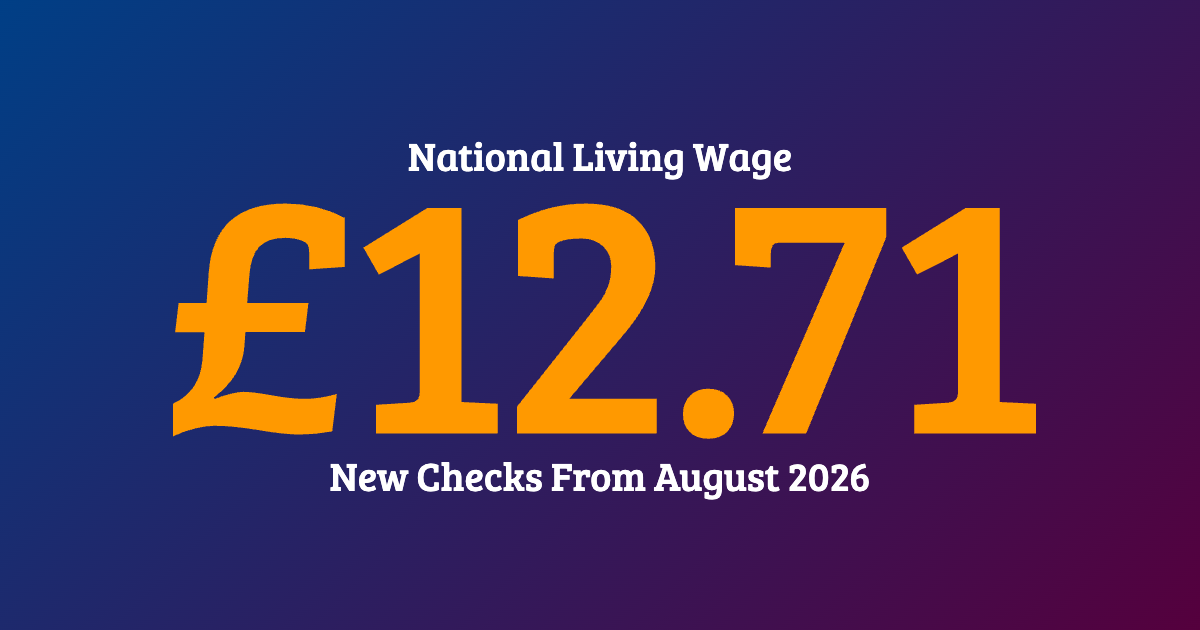
- Salaried staff working long hours. A graduate on £26,000 contracted to 37.5 hours a week earns about £13.33 an hour. If they regularly work 45 hours, that falls to around £12.45, even allowing for holiday, which is below the £12.71 National Living Wage.
- Salary sacrifice. Pension, electric car and cycle-to-work schemes reduce the pay that counts, which can tip lower earners below the minimum.
- Interns and trial days. Calling someone an intern, or a day’s work a trial, does not remove the right to be paid.
- Costs passed on to staff. Deductions for equipment or uniforms, or staff buying these without reimbursement, reduce NMW pay.
- Warehouse, fulfilment and event staff. Pre-shift tasks, security checks, travel between sites and training all count as working time.
- Birthdays. When a worker moves into a higher age band, their pay must rise from the start of the next pay reference period.
Current minimum wage rates
These rates have applied since 1 April 2026:
| Worker | Minimum hourly rate |
| National Living Wage (21 and over) | £12.71 |
| Aged 18 to 20 | £10.85 |
| Aged 16 to 17 | £8.00 |
| Apprentice rate | £8.00 |
| Accommodation offset | £11.10 per day |
Rates change every 1 April, taking effect from the first pay reference period beginning on or after that date. Update payroll in advance so the new rates are in place on time, and check the latest figures on GOV.UK.
Who is entitled?
Almost every worker over compulsory school age is entitled to the minimum wage, including part-time, casual, agency and remote workers, whether their contract is written, verbal or implied.
“Worker” is wider than “employee”: it can include anyone who personally provides services under a contract, unless they are genuinely self-employed. Labels do not decide status. Calling someone a contractor, intern or volunteer carries no weight on its own; HMRC looks at what happens in practice.
The main exemptions are narrow. They cover genuinely self-employed people, genuine volunteers, students on a required placement of up to a year as part of a UK further or higher education course, certain government schemes, family members living in the employer’s home, and company directors without an employment contract. Check the position carefully before treating anyone as exempt.
How the check works
Compliance is tested for each pay reference period: the period a payment covers, such as a week or a month, and never longer than one calendar month. For each period:
- Work out NMW pay, excluding anything that does not count.
- Work out working hours, including all time that counts as work.
- Divide pay by hours to get the average hourly rate.
- Compare it with the correct rate for the worker. If it is lower, they have been underpaid.
How hours are counted depends on the type of work:
| Type of work | Typical arrangement |
| Salaried hours work | Annual salary for set contracted hours |
| Time work | Paid by the hour |
| Output work | Paid per item or task |
| Unmeasured work | No set hours, paid another way |
One person can do more than one type of work under the same contract.
What counts as pay, and what reduces it
Not everything that goes through payroll counts. Basic pay, bonuses and commission generally count in the pay reference period they are paid. Pay for a period can also count if paid in the following period.
These do not count:
- overtime and shift premiums (the basic rate for those hours still counts)
- tips, gratuities and service charges
- benefits in kind, except accommodation up to the offset
- expense reimbursements and most allowances
- amounts given up under salary sacrifice
Deductions can cause a breach. Deductions or payments for a business’s benefit reduce the pay that counts, such as charges for uniforms or equipment, or accommodation above the £11.10 daily offset. The same applies if workers buy work items themselves without reimbursement.
Salary sacrifice needs particular care. The check is made on the lower, post-sacrifice pay, so a well-intentioned benefit scheme can easily cause an underpayment.
Paying for all working time
Many underpayments come from time worked but not paid. Look beyond contracted hours and consider:
- mandatory training, including at home
- travel between sites or client locations (not the normal commute)
- meetings, handovers and briefings
- tasks before or after a shift, such as security checks or changing into uniform
- time when the worker must be available at or near the workplace
Salaried staff and unpaid overtime
A salary does not guarantee compliance. Track whether salaried staff work more than their contracted basic annual hours; once they do, further hours count in the calculation even if unpaid. This is the risk in the long-hours example above. Review anyone paid close to the minimum who regularly works late, at weekends or through launches and deadlines.
Sleep-in shifts have their own rules, so take specific advice if they apply to you.
Apprentices, interns and trial shifts
Apprentices
The apprentice rate applies only where the apprentice is under 19, or is 19 or over and in the first year of their apprenticeship. After that first year, apprentices aged 19 or over must move to their age-related rate. Common mistakes include:
- keeping someone on the apprentice rate after their first year
- using it for someone not on a genuine apprenticeship, or before it starts or after it ends
- not paying for time spent studying or training
Interns and work experience
An intern who is a worker is entitled to the minimum wage unless an exemption applies, such as a required university placement, certain government schemes or genuine voluntary work. An intern doing real work to a set schedule is likely to be a worker.
Unpaid trial shifts
A short unpaid trial can be legitimate if it is genuinely part of recruitment. The government’s guidance considers its purpose, length, whether the candidate is observed, and whether the work benefits the business. In the government’s view, a trial longer than one day is likely to require payment in all but very exceptional circumstances. If a candidate is doing productive work, pay them.
Records and enforcement
As the employer, you must be able to prove the minimum wage has been paid. Keep records of each worker’s age, pay, hours, rate, deductions and salary sacrifice, and any apprenticeship or exemption, for at least six years.
HMRC can investigate following a complaint or on its own initiative, visiting premises, requesting records and interviewing staff. If it finds an underpayment, it issues a Notice of Underpayment requiring the employer to:
- pay arrears to every affected worker, at today’s rate if that is higher than the rate at the time
- pay a penalty of up to 200% of the arrears, between £100 and £20,000 per worker
The penalty is halved if paid within 14 days. Employers may also be publicly named, and failing to keep records, or keeping false ones, is a criminal offence.
What to do if you find a problem
Fixing an issue yourself is far better than having HMRC find it. If your review turns something up:
- Fix it going forward so future pay is compliant.
- Work out how far back it goes. HMRC’s letter asks employers to review six years, including leavers.
- Pay the arrears at the current minimum wage rate.
- Record what you found, how you calculated it and what you paid.
- Take advice if the issue is complex, affects many workers, or you are unsure how to calculate it.
Your minimum wage checklist
Use this list for a regular health check of your payroll:
- Each worker is on the correct rate for their age, and moves up at each new age band.
- Apprentices qualify for the apprentice rate, and move to the age rate when required.
- Salaried staff’s actual hours are tracked against their contracted annual hours.
- All working time is paid, including training, travel between sites and pre- or post-shift tasks.
- Salary sacrifice does not take anyone below the minimum.
- Deductions for uniforms, equipment and other work costs have been reviewed.
- Accommodation charges are within the £11.10 daily offset.
- Tips and service charges are not used to make up minimum pay.
- Interns, trainees and trial shifts have been assessed.
- Each worker’s type of work (salaried, time, output or unmeasured) is identified.
- Records are complete and kept for at least six years.
How Finerva can help
Our payroll team can help review your payroll against the minimum wage rules, calculate any arrears and help you put things right. If you’ve received HMRC’s letter, we can also act as your agent and speak to HMRC on your behalf.
To arrange a review, call 020 3422 9800 or email hello@finerva.com.
We can provide a tailored quote for this support based on the scope of the review required.
For more detail, see HMRC’s guidance on calculating the minimum wage. For free, confidential advice, call the Acas helpline on 0300 123 1160.
The information available on this page is of a general nature and is not intended to provide specific advice to any individuals or entities. We work hard to ensure this information is accurate at the time of publishing, although there is no guarantee that such information is accurate at the time you read this. We recommend individuals and companies seek professional advice on their circumstances and matters.
-

Selling on Amazon? What Marketplace VAT Collection Means For Your Cash Flow
28 October 2026
The 2026 Budget extends marketplace VAT collection to UK businesses to stop sellers undercutting compliant businesses by not paying the VAT they owe.
Advice : Policy and Tax
-
EMI2 Explained: Share Options for Companies That Have Outgrown EMI
28 October 2026
EMI2 is CSOP with a new name and better limits. CSOP has been around for years and is open to companies of any size, but it was rarely used.
Advice : Employment, Policy and Tax
-
Founders’ Relief Explained: Who Qualifies for the New 10% CGT Rate
28 October 2026
Founders’ Relief reduces the CGT rate to 10% on qualifying gains when you sell shares in your company, up to a lifetime limit of £10m. Key points:
Advice : Exit and Policy




Sign up for the Founder's Bulletin
Join our community of 4,000 + Founders, Entrepreneurs & Advisors. Refreshingly simple financial insights to help your business soar.
